
Dr. Mukund Agrawal Explains the Role of PRP in Orthopaedics
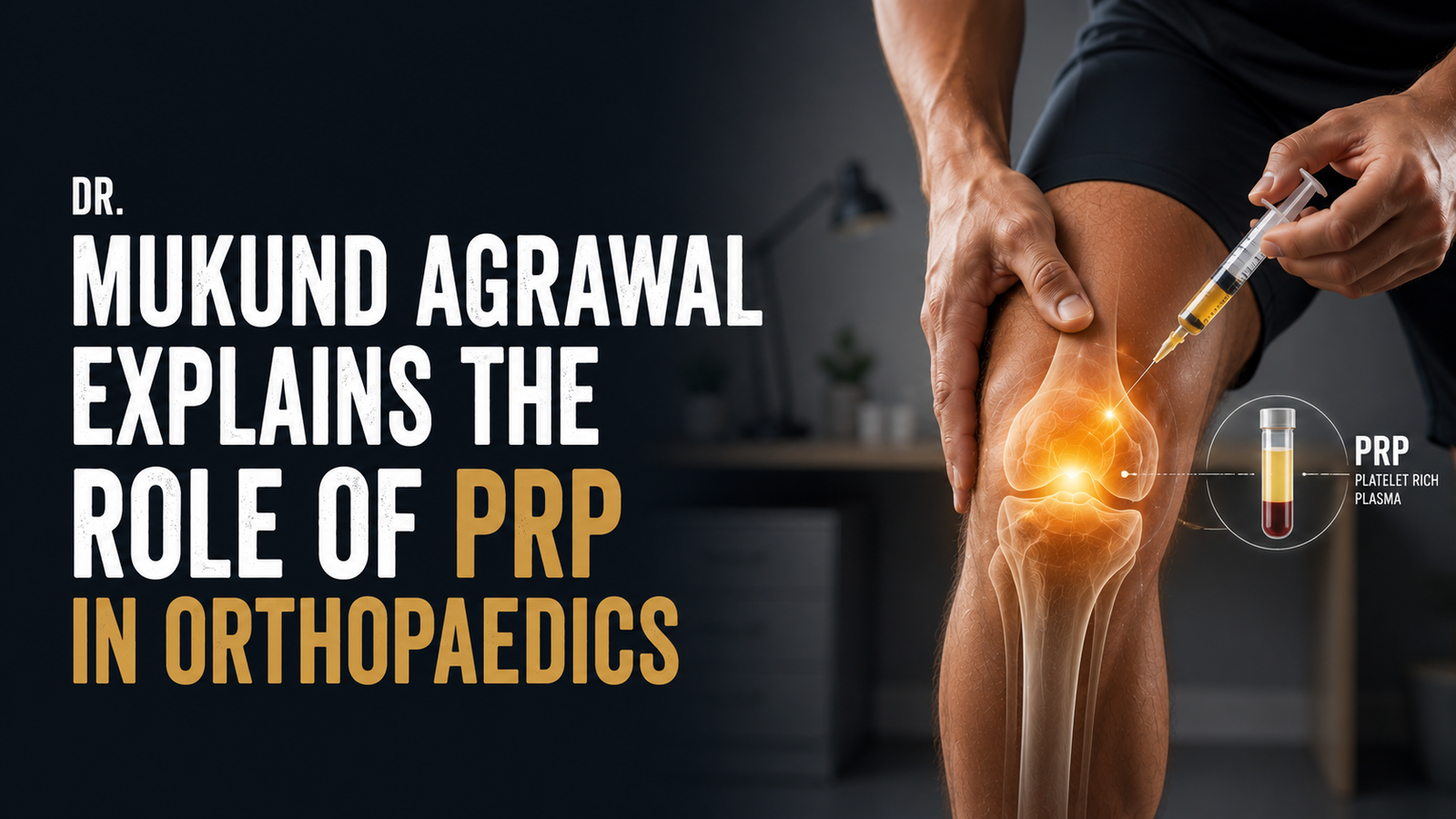
One of the most common questions patients ask today is:
“Can my joint pain be treated without surgery?”
With growing awareness about regenerative medicine, many people have heard about PRP therapy and its potential role in treating orthopaedic conditions. Athletes, active individuals, and even patients with arthritis are increasingly exploring this treatment option.
But what exactly is PRP?
How does it work?
And most importantly, who is likely to benefit from it?
According to Dr. Mukund Agrawal, PRP is not a miracle cure, but when used in the right patient and for the right condition, it can be a valuable tool in modern orthopaedic care.
What Is PRP?
PRP stands for Platelet-Rich Plasma. It is a regenerative treatment that uses a concentrated portion of the patient’s own blood to support healing and tissue repair. Blood contains several components, including:
- Red blood cells
- White blood cells
- Plasma
- Platelets
While platelets are best known for helping blood clot after an injury, they also contain numerous growth factors and proteins that play a critical role in healing damaged tissues.
PRP therapy involves concentrating these platelets and delivering them directly to the affected area.
How Is PRP Prepared?
The process is relatively straightforward. A small amount of blood is drawn from the patient, similar to a routine blood test. The blood is then processed using specialized equipment that separates and concentrates the platelets. The resulting platelet-rich plasma is carefully injected into the area being treated.Since the treatment utilizes the patient’s own blood, it is considered an autologous therapy, minimizing the risk of allergic reactions or rejection.
How Does PRP Work?
When tissues are injured, the body naturally sends platelets to the affected area to initiate repair. PRP aims to enhance this process by delivering a higher concentration of platelets directly where healing is needed. The growth factors released by platelets may help:
- Support tissue repair
- Reduce inflammation
- Promote collagen production
- Encourage blood vessel formation
- Improve healing response
The goal is to create a biological environment that supports recovery and improves function.
What Conditions Can PRP Be Used For?
PRP has become increasingly popular in orthopaedics because it can be used in a variety of musculoskeletal conditions.
Early Knee Arthritis
Patients with mild to moderate osteoarthritis often seek treatment options before considering surgery. PRP may help reduce pain and improve function in selected patients with early-stage arthritis.
Tendon Injuries
PRP is commonly used for chronic tendon conditions such as:
- Tennis elbow
- Golfer’s elbow
- Achilles tendinopathy
- Patellar tendinopathy
- Rotator cuff tendinopathy
These conditions often involve poor healing capacity, making regenerative treatments particularly attractive.
Ligament Injuries
Certain ligament injuries may benefit from biologic support to enhance the healing process.
Sports Injuries
Athletes frequently utilize PRP as part of a comprehensive rehabilitation strategy aimed at promoting recovery and returning to activity.
Chronic Musculoskeletal Pain
Some chronic pain conditions involving soft tissue damage may also be considered for PRP treatment after careful evaluation.
PRP for Knee Arthritis: Why Is It So Popular?
One of the most common applications of PRP today is in the treatment of knee osteoarthritis. Arthritis develops when cartilage gradually wears down, leading to:
- Pain
- Stiffness
- Swelling
- Reduced mobility
While PRP cannot regrow an entirely damaged joint, it may help reduce inflammation and improve symptoms in appropriately selected patients. For individuals with early arthritis, PRP can sometimes serve as an important part of a joint preservation strategy. This is one reason why Dr. Mukund Agrawal frequently considers PRP before recommending more invasive procedures when clinically appropriate.
How Long Does It Take to See Results?
PRP does not work like a painkiller.
Its effects are typically gradual because it relies on biological healing processes.
Some patients notice improvement within a few weeks, while others may experience progressive benefits over several months.
The timeline varies depending on:
- The condition being treated
- Severity of tissue damage
- Overall health
- Activity level
- Rehabilitation program
Patience and realistic expectations are important.
Is PRP Better Than Steroid Injections?
PRP and steroid injections serve different purposes. Steroid injections primarily aim to reduce inflammation and provide temporary symptom relief. PRP focuses on supporting the body’s natural healing mechanisms. The choice between these treatments depends on the diagnosis, severity of symptoms, treatment goals, and individual patient factors.
A detailed consultation is essential before deciding which approach is most appropriate.
Who Is an Ideal Candidate for PRP?
PRP is often considered for patients who:
- Have early arthritis
- Have tendon or ligament injuries
- Wish to explore non-surgical treatment options
- Have not achieved adequate relief with physiotherapy alone
- Want to delay more invasive procedures when medically appropriate
However, not every patient is a suitable candidate.
Proper evaluation remains the most important step before recommending PRP therapy.
The Importance of a Comprehensive Treatment Plan
One of the biggest misconceptions about PRP is that the injection alone solves the problem.In reality, successful outcomes often depend on combining PRP with:
- Activity modification
- Physiotherapy
- Strengthening exercises
- Weight management when necessary
- Lifestyle adjustments
PRP should be viewed as part of a broader treatment strategy rather than a standalone solution.
A Modern Approach to Orthopaedic Care
Orthopaedics is evolving beyond simply treating symptoms. Today’s focus is increasingly on preserving joints, supporting natural healing, and helping patients remain active for longer. PRP has become an important part of this shift toward regenerative medicine. At The Joint Replacement Centre, Dr. Mukund Agrawal carefully evaluates each patient to determine whether PRP therapy is likely to provide meaningful benefit. By combining advanced diagnostics, evidence-based treatment strategies, and a commitment to personalized care, he helps patients explore effective solutions before considering major surgical intervention. Because in many cases, the goal is not just to treat pain—it is to restore movement, function, and quality of life.
