
Everything You Need to Know About the Implants Used in Knee Replacement Surgeries
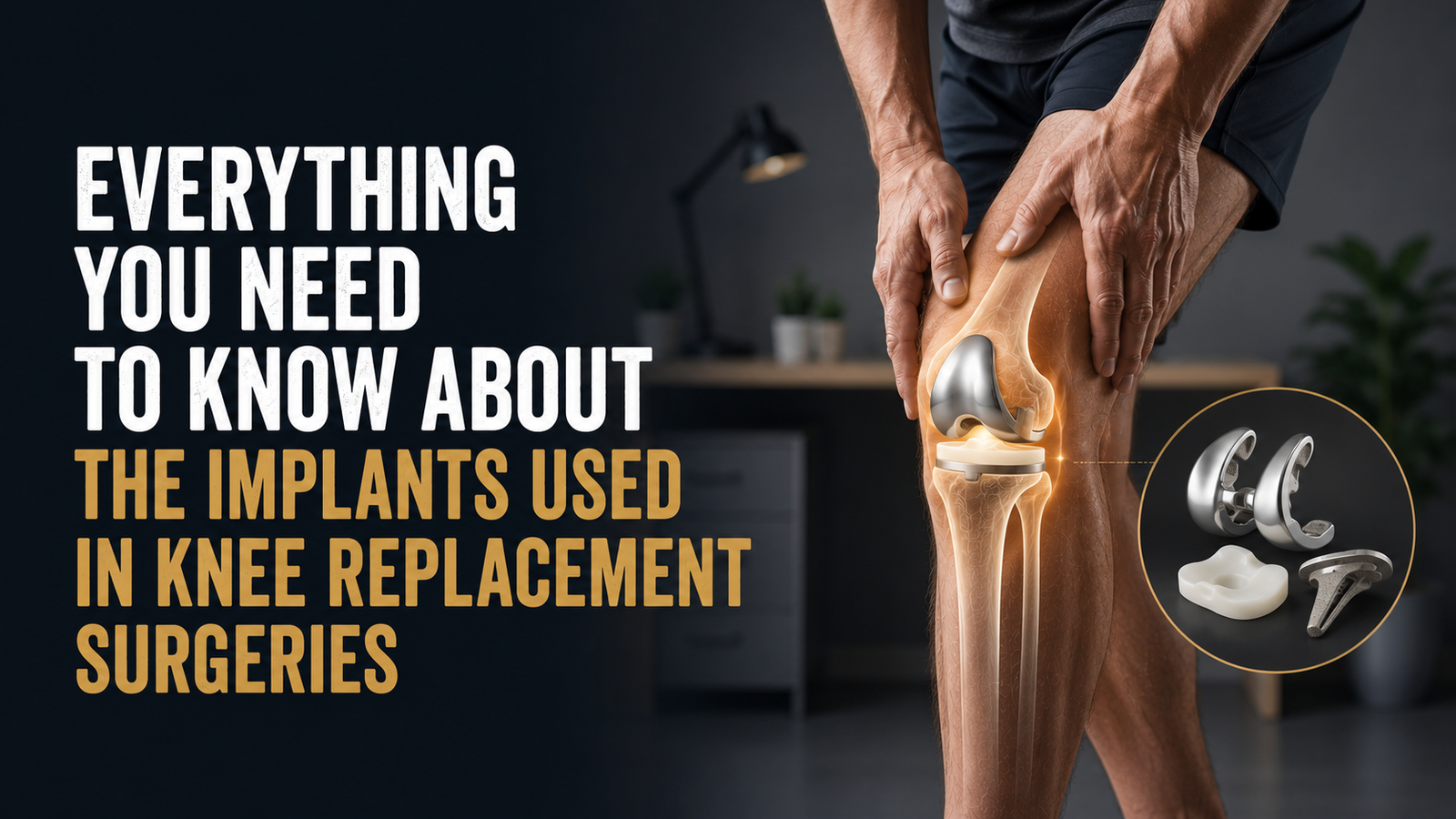
One of the most common concerns patients have before undergoing knee replacement surgery is: “Which implant will be used in my knee?” It is a valid question.
After all, the implant becomes a part of your body and plays a crucial role in restoring movement, reducing pain, and helping you return to everyday activities.However, many patients are surprised to learn that there is no single “best” knee replacement implant for everyone.
Modern knee replacement surgery is highly personalized, and the choice of implant depends on several factors including age, anatomy, activity level, bone quality, and the condition of the joint. According to Dr. Mukund Agrawal, successful knee replacement is not just about choosing a premium implant. It is about selecting the right implant for the right patient and positioning it with precision.
What Is a Knee Replacement Implant?
A knee replacement implant is an artificial device designed to replace the damaged surfaces of the knee joint. When arthritis causes cartilage to wear away, the bones begin rubbing against each other, leading to:
- Pain
- Stiffness
- Swelling
- Difficulty walking
- Reduced quality of life
A knee replacement implant recreates the smooth surfaces of the joint, allowing movement with significantly less pain. The goal is not simply to replace a joint—it is to restore function and improve quality of life.
What Is a Knee Implant Made Of?
Modern knee implants are engineered using highly durable materials designed to withstand years of daily activity.
Metal Components
The femoral component (attached to the thigh bone) and the tibial component (attached to the shin bone) are usually made from medical-grade metal alloys such as:
- Cobalt-chromium alloys
- Titanium alloys
- Oxidized zirconium in select designs
These materials are chosen for their strength, durability, and biocompatibility.
Polyethylene Insert
Between the metal components sits a highly specialized plastic spacer known as polyethylene.
This insert acts as the new cushioning surface of the knee and allows smooth movement between the implant components.
Advancements in polyethylene technology have significantly improved implant longevity over the years.
What Are the Main Parts of a Knee Replacement Implant?
A total knee replacement typically consists of three components.
Femoral Component
This replaces the damaged end of the thigh bone (femur).
Tibial Component
This replaces the upper surface of the shin bone (tibia).
Polyethylene Insert
This functions as the bearing surface that allows smooth motion between the metal components.
In some patients, an additional patellar component may be used to address the undersurface of the kneecap.
Are All Knee Implants the Same?
No. There are several implant designs available today. Different implants are developed to accommodate variations in:
- Anatomy
- Bone quality
- Ligament function
- Activity levels
- Surgical goals
Modern implant systems are designed to help recreate natural knee movement while maintaining stability and durability.
This is why implant selection should always be individualized rather than based on marketing claims alone.
Cemented vs Cementless Knee Implants
One of the most common questions patients ask is whether the implant will be cemented or cementless.
Cemented Knee Replacement
In this approach, a specialized medical bone cement is used to secure the implant to the bone.
This remains the most widely used technique worldwide and has demonstrated excellent long-term results.
Cementless Knee Replacement
These implants are designed to allow the patient’s bone to grow directly into the implant surface.
While cementless technology continues to advance, suitability depends on factors such as age, bone quality, and overall health.
The decision is made after careful evaluation by the surgeon.
How Long Do Knee Replacement Implants Last?
This is perhaps the most frequently asked question in knee replacement surgery. Modern implants have shown excellent durability. Many patients can expect their implants to function successfully for 15 to 20 years or even longer. Several factors influence longevity:
- Implant design
- Surgical accuracy
- Bone quality
- Body weight
- Activity level
- Rehabilitation adherence
The lifespan of an implant depends not only on the implant itself but also on how accurately it is positioned during surgery.
Why Implant Positioning Matters More Than Patients Realize
Even the most advanced implant can underperform if it is not positioned correctly. Proper alignment helps ensure:
- Smooth movement
- Balanced joint mechanics
- Reduced wear
- Improved stability
- Long-term implant survival
This is one reason why advanced technologies such as robotic-assisted surgery have become increasingly important.
They allow surgeons to achieve greater precision in implant placement and joint balancing.
Does a More Expensive Implant Mean Better Results?
Not necessarily. Patients are often exposed to marketing claims suggesting that one implant is superior to all others. In reality, clinical outcomes depend on multiple factors, including:
- Correct patient selection
- Surgical expertise
- Implant positioning
- Rehabilitation quality
- Patient commitment to recovery
The best implant is not always the most expensive one.
It is the implant that best suits the patient’s anatomy, lifestyle, and clinical condition.
How Technology Is Improving Implant Performance
Modern orthopaedics has witnessed remarkable innovations in implant technology.Today’s implants are designed with:
- Improved wear resistance
- Better anatomical fit
- Enhanced stability
- Greater range of motion
- Long-term durability
Combined with robotic-assisted surgery and advanced preoperative planning, these innovations help surgeons achieve more predictable outcomes than ever before.
What Should Patients Focus on Before Surgery?
While implant choice is important, patients should focus on the bigger picture. Questions worth asking include:
- Is surgery truly necessary at this stage?
- Is the implant appropriate for my condition?
- What technology will be used during surgery?
- What can I expect during recovery?
- How can I maximize the lifespan of my implant?
A successful knee replacement depends on thoughtful planning and informed decision-making.
The Right Implant Is the One Chosen for You
Modern knee replacement implants have transformed the lives of millions of patients worldwide. They are stronger, more durable, and more anatomically advanced than ever before.
However, the success of knee replacement surgery is not determined by the implant alone. It depends on selecting the right implant, placing it accurately, and tailoring the treatment to the individual patient.
At The Joint Replacement Centre, Dr. Mukund Agrawal combines advanced technology, evidence-based surgical techniques, and personalized treatment planning to ensure that every patient receives the most appropriate implant for their unique needs.
Because the goal of knee replacement is not simply replacing a joint—it is helping patients move comfortably, confidently, and independently for years to come.
