
PRP, Orthobiologics & Exercises: Dr. Mukund Agrawal’s Opinion on Modern Alternatives to Joint Replacement Surgery
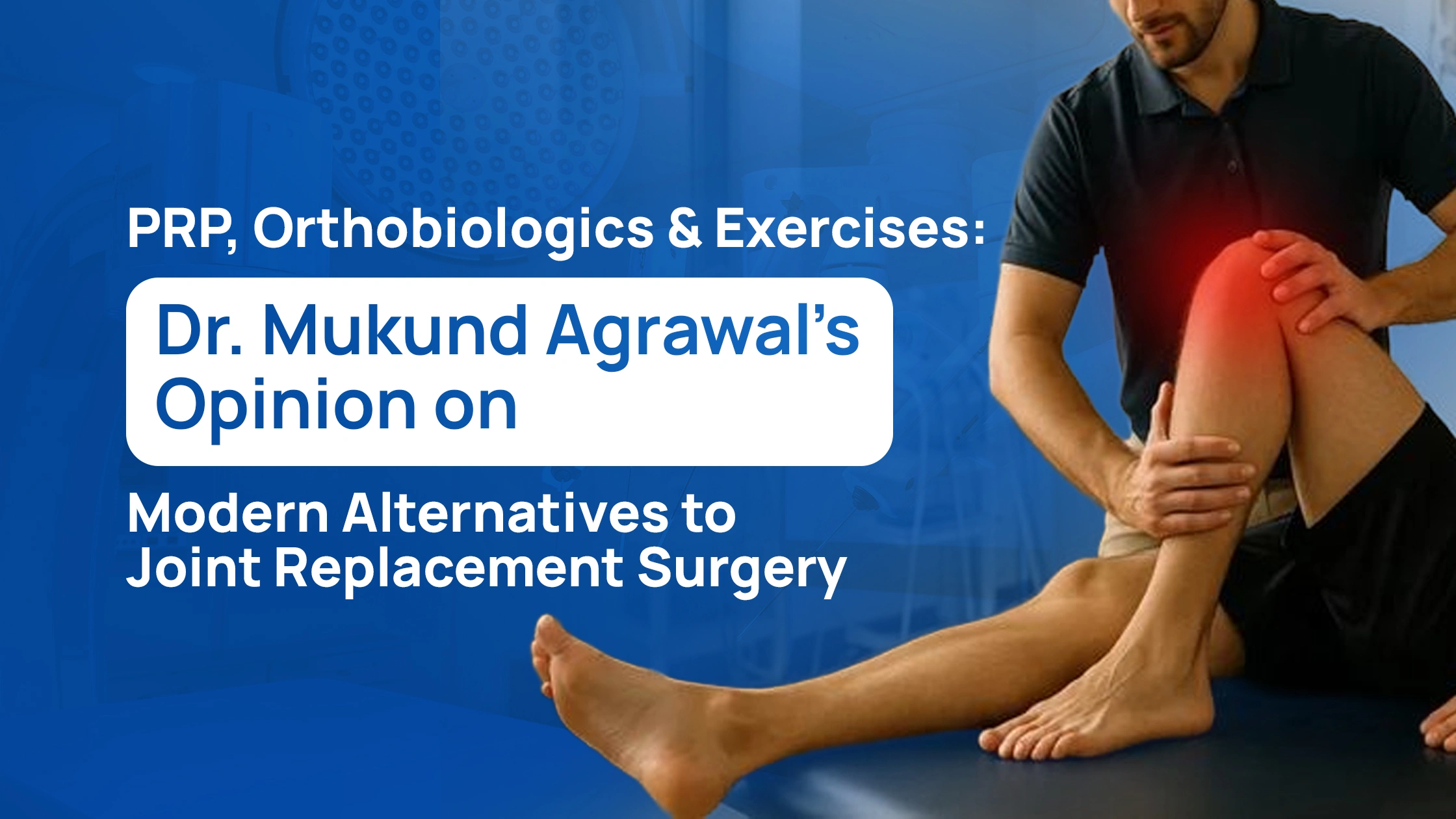
For patients with knee or hip pain, the internet is flooded with promises—“PRP will cure arthritis,” “Exercises can reverse joint damage,” “Biologics can replace surgery.” The result is confusion. Some patients develop false hope; others dismiss non-surgical care altogether.
According to Dr. Mukund Agrawal, the truth lies in the middle. PRP, orthobiologics, and structured exercise programs are valuable tools—but only when used for the right patient, at the right stage, with the right expectations.
This blog outlines his opinion on where these approaches help, where they don’t, and how patients should think about them realistically.
First, What Do These Treatments Actually Mean?
PRP (Platelet-Rich Plasma)
- Prepared from the patient’s own blood
- Concentrated platelets release growth factors
- Aims to reduce inflammation and improve joint environment
Orthobiologics
- A broader category including PRP and other biologic injectables
- Focuses on tissue support, inflammation control, and healing potential
Exercise & Rehabilitation Programs
- Targeted strengthening of muscles supporting the joint
- Improves alignment, load distribution, and stability
- Reduces pain by correcting biomechanics
None of these treatments “replace” joints—but they can improve how joints function and feel.
Who Usually Benefits from These Approaches?
Dr. Agrawal notes that these interventions work best in specific patient profiles:
- Early to moderate arthritis
- Preserved joint alignment and stability
- Activity-related pain rather than constant rest pain
- Motivated patients willing to follow rehab plans
- Younger or middle-aged individuals looking to stay active
In such patients, symptoms often improve significantly, and the need for surgery can be postponed safely.
The Most Common Misunderstanding
One misconception Dr. Agrawal frequently addresses is:
“If PRP didn’t work once, nothing else will.”
In reality:
- PRP is not a one-size-fits-all solution
- Technique, patient selection, and expectations matter
- PRP works best as part of a structured treatment plan, not in isolation
When used randomly or without rehabilitation support, results are understandably disappointing.
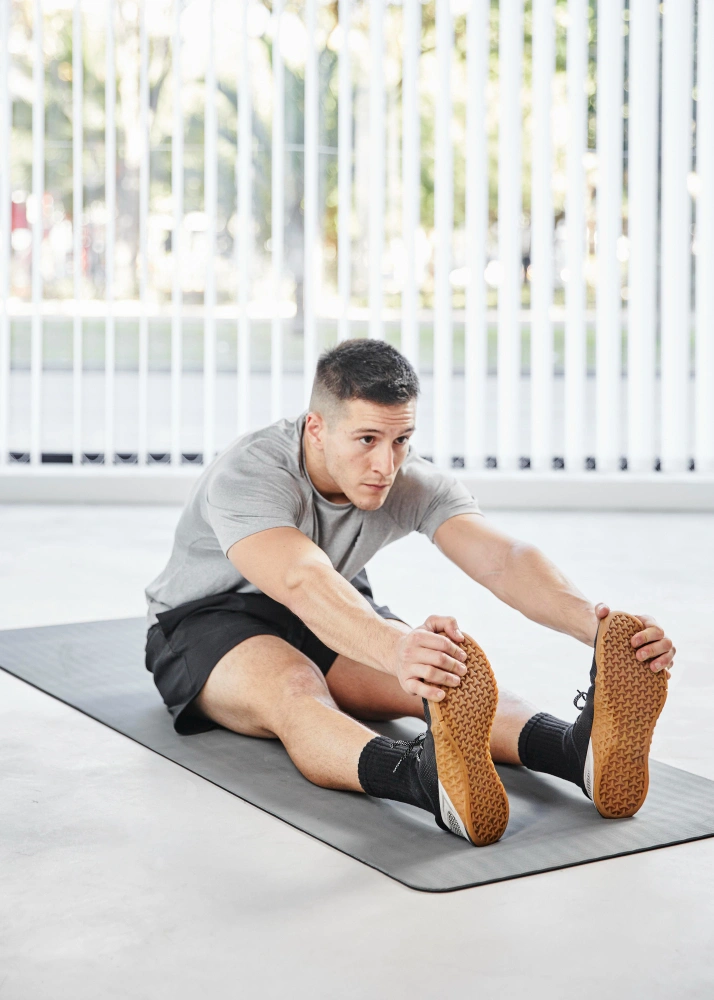
The Role of Exercises: Often Underrated, Always Essential
Among all non-surgical interventions, exercise remains the most powerful—and the most ignored.
Dr. Agrawal consistently emphasises:
- Weak muscles increase joint stress
- Poor biomechanics accelerate wear
- Pain often improves once muscles start supporting the joint properly
Exercises help by:
- Reducing load on damaged cartilage
- Improving balance and coordination
- Enhancing confidence in movement
- Slowing functional decline
Without exercise, even advanced treatments offer only temporary relief.
The Risk of Skipping a Second Opinion
Patients who rush into surgery without clarity may later experience:
- Regret about timing
- Unrealistic expectations
- Dissatisfaction despite technically successful surgery
On the other hand, patients who delay surgery too long may face:
- Muscle wasting
- Stiffness and deformity
- More complex surgeries later
The goal of a second opinion is to avoid both extremes.
What These Treatments Can Realistically Achieve
A balanced view is essential. According to Dr. Agrawal, these approaches can:
- Reduce pain and stiffness
- Improve walking capacity
- Enhance daily function
- Delay surgical timelines
- Improve readiness if surgery is needed later
What they cannot do:
- Regrow completely worn-out cartilage
- Correct severe deformities
- Eliminate the need for surgery in advanced disease
Clarity here prevents disappointment.
Why Some Patients Feel These Treatments “Didn’t Work”
In many cases, failure isn’t due to the treatment itself but to:
- Poor patient selection
- Incorrect diagnosis
- Lack of guided rehabilitation
- Unrealistic expectations
- Inconsistent follow-up
Dr. Agrawal stresses that context matters more than the injection.
How These Treatments Fit into a Bigger Plan
One of Dr. Agrawal’s strongest opinions is that modern orthopaedic care should be staged, not reactive.
A typical progression may involve:
- Education and load management
- Supervised exercise and physiotherapy
- Image-guided injections or orthobiologics
- Re-evaluation of symptoms and function
- Surgery only when benefits clearly outweigh risks
This structured approach ensures every step adds value.
When These Options Are No Longer Enough
Being balanced also means knowing when to move forward.
Dr. Agrawal advises that joint replacement becomes appropriate when:
- Pain persists at rest or night
- Function continues to decline despite structured care
- Deformity or instability progresses
- Quality of life is clearly affected
At that stage, delaying surgery further may reduce outcomes rather than improve them.
Why Patients Across India Need This Perspective
With increasing awareness, patients today often:
- Try multiple injections without guidance
- Switch exercise plans frequently
- Delay surgery due to fear or misinformation
This leads to frustration and mixed results.
Dr. Agrawal’s opinion is clear:
“Non-surgical care should be intelligent, structured, and time-bound—not endless or random.”
Final Takeaway
PRP, orthobiologics, and exercise programs are important parts of modern joint care. They offer meaningful relief and help many patients stay active longer—but they work best when guided by clinical reasoning, not promises.
As Dr. Mukund Agrawal’s perspective highlights:
“The goal is not to avoid surgery forever. The goal is to choose the right treatment at the right stage, with clarity and confidence.”
For patients standing between uncertainty and action, informed guidance—not extremes—is what leads to the best outcomes.