
What Is HTO (High Tibial Osteotomy)? A Complete Guide
When most people hear the words “knee arthritis,” they immediately think of knee replacement surgery. But what if you’re relatively young, active, and not yet ready for a joint replacement? What if there was a way to preserve your natural knee while relieving pain and slowing the progression of arthritis?
This is where High Tibial Osteotomy (HTO) can be an excellent option for carefully selected patients. Although it is not as widely discussed as knee replacement surgery, HTO remains one of the most valuable joint-preserving procedures in modern orthopaedics.
According to Dr. Mukund Agrawal, HTO can help selected patients continue an active lifestyle while delaying the need for knee replacement surgery for many years.
What Is High Tibial Osteotomy (HTO)?
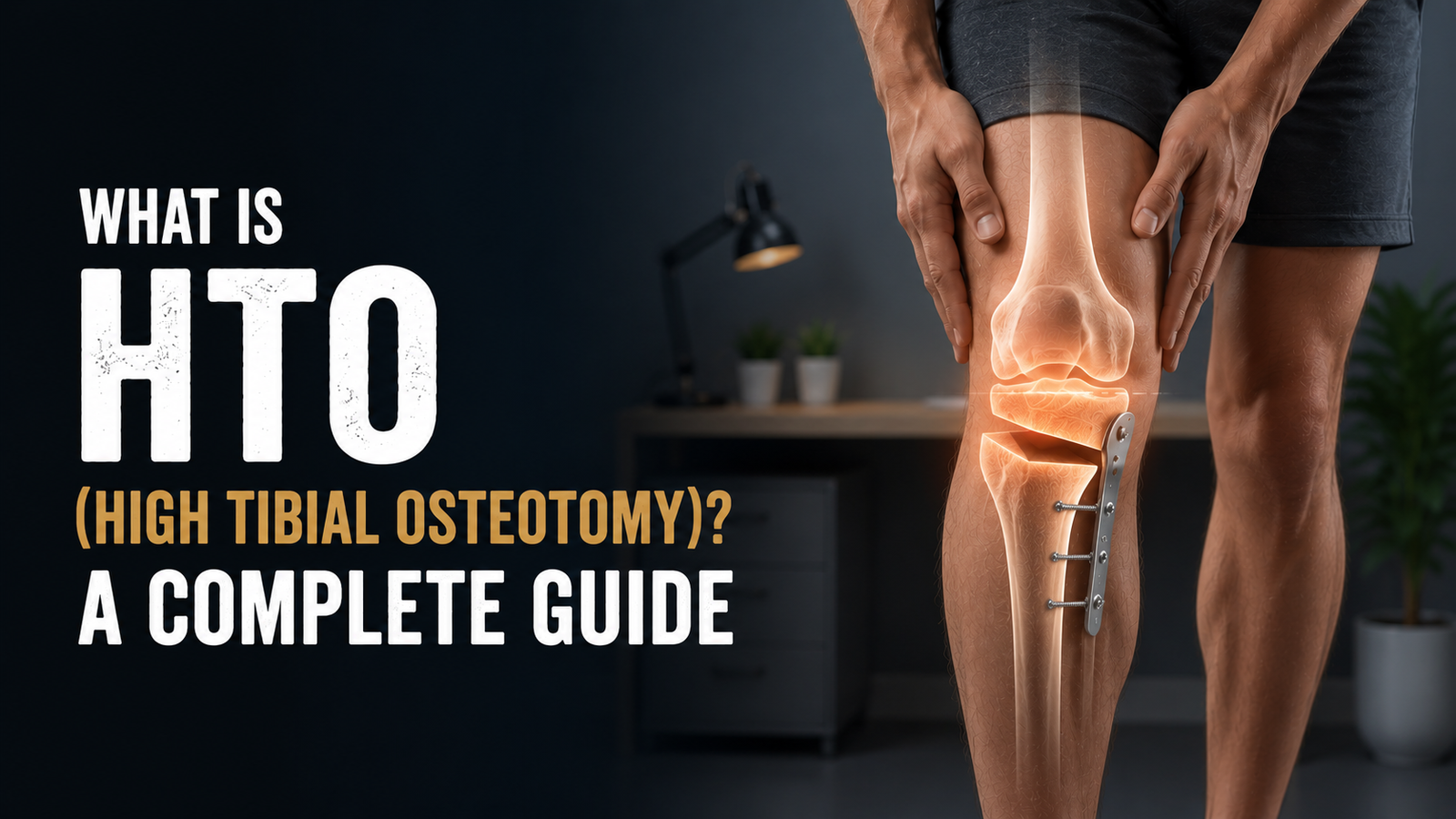
High Tibial Osteotomy is a surgical procedure that realigns the knee joint by changing the weight-bearing axis of the leg. The procedure involves making a carefully planned correction in the upper part of the tibia (shin bone) to redistribute body weight away from the damaged portion of the knee.
The goal is simple: Reduce pressure on the arthritic area and shift the load toward the healthier part of the joint. Rather than replacing the knee, HTO helps preserve the patient’s natural knee structures.
Why Is Knee Alignment Important?
The knee is designed to distribute body weight evenly. However, some individuals develop alignment problems such as bow legs (varus deformity). When this happens, excessive pressure is placed on the inner side of the knee. Over time, this can lead to:
- Cartilage wear
- Early arthritis
- Persistent knee pain
- Reduced mobility
- Progressive joint degeneration
Correcting the alignment helps reduce this abnormal stress and can slow further damage.
Who Is an Ideal Candidate for HTO?
HTO is not suitable for everyone. The best outcomes occur in carefully selected patients. Generally, candidates include individuals who:
Have Arthritis Limited to One Side of the Knee
Most commonly, the inner (medial) compartment of the knee is affected.
Are Relatively Young and Active
Patients who wish to maintain a physically active lifestyle often benefit from joint-preserving procedures.
Have Bow-Legged Alignment
Varus deformity causes excessive loading of the inner compartment of the knee.
Have Good Knee Motion
The procedure works best when overall knee function remains reasonably preserved.
Want to Delay Knee Replacement
Many patients prefer to preserve their natural knee for as long as possible before considering joint replacement surgery.
How Does HTO Work?
Think of a car whose tires are wearing out unevenly because the wheel alignment is off. Simply replacing the tire does not fix the underlying problem. The alignment must be corrected. The same principle applies to the knee.
HTO changes the alignment of the leg so that body weight is distributed more evenly across the joint. This reduces stress on the damaged compartment and allows healthier portions of the knee to bear more load.
As a result:
- Pain may decrease
- Function may improve
- Arthritis progression may slow
- Activity levels may increase
What Are the Benefits of HTO?
One reason Dr. Mukund Agrawal continues to recommend HTO for appropriate patients is because of its ability to preserve the natural joint.
Preserves the Patient’s Own Knee
Unlike knee replacement, the natural knee structures remain intact.
Delays Knee Replacement
Many patients can postpone joint replacement surgery for several years.
Supports an Active Lifestyle
Patients often return to activities that may be restricted after joint replacement.
Addresses the Root Cause
The procedure corrects the underlying mechanical problem contributing to arthritis progression.
Improved Quality of Life
Reduced pain and better function can significantly improve daily living.
How Is HTO Different from Knee Replacement?
This is one of the most important distinctions patients should understand. HTO
- Preserves the natural joint
- Corrects alignment
- Suitable for selected younger patients
- Delays the need for replacement surgery
Knee Replacement
- Replaces damaged joint surfaces
- More suitable for advanced arthritis
- Typically recommended when preservation procedures are no longer effective Neither procedure is inherently better.
The choice depends entirely on the condition of the knee and the patient’s goals.
What Is Recovery Like After HTO?
Recovery requires commitment and patience.
Most patients undergo a structured rehabilitation program that includes:
- Controlled weight-bearing
- Physiotherapy
- Strengthening exercises
- Mobility training
Recovery timelines vary depending on:
- Extent of correction
- Bone healing
- Overall health
- Rehabilitation adherence
The goal is to allow the bone to heal properly while gradually restoring function.
Can HTO Prevent Knee Replacement Forever?
This is a common question. The answer is not necessarily. HTO is designed to delay the progression of arthritis and postpone the need for joint replacement. For many patients, this delay can be substantial. Some may eventually require knee replacement later in life, while others continue to function well for many years after HTO. The success of the procedure depends on appropriate patient selection and precise surgical planning.
The Role of Advanced Technology in HTO
Modern technology has significantly improved the accuracy of HTO procedures. Today’s planning techniques allow surgeons to:
- Precisely measure deformities
- Calculate correction angles accurately
- Optimize weight-bearing alignment
- Improve surgical outcomes
This level of precision is essential because even small alignment changes can significantly affect long-term results.
Why Joint Preservation Matters
One of the biggest shifts in orthopaedics today is the growing focus on preserving joints whenever possible. Not every patient with arthritis needs an immediate joint replacement. For carefully selected individuals, procedures such as HTO can provide excellent pain relief while maintaining natural joint function.
This philosophy aligns closely with Dr. Mukund Agrawal’s approach to orthopaedic care: choosing the least invasive treatment capable of delivering the best long-term outcome.
Preserving Your Knee for the Future
High Tibial Osteotomy remains one of the most effective options for younger, active patients with early knee arthritis and alignment-related joint damage. By correcting the mechanical forces that contribute to arthritis progression, HTO can reduce pain, improve function, and help preserve the natural knee for years to come. At The Joint Replacement Centre, Dr. Mukund Agrawal carefully evaluates each patient’s anatomy, lifestyle, and goals to determine whether HTO, biologic treatments, partial knee replacement, or total knee replacement offers the best path forward. Because sometimes the best way to treat a knee is not to replace it—but to preserve it.
